Here is a conversation I have with almost every out-of-state buyer. They find a condo online, run the mortgage math, and call me excited. Then I walk them through the HOA dues, the master association fee, the transfer fee at closing, and sometimes a club membership on top, and the monthly number changes by thousands of dollars.
The listing portals will not do this math for you. They display a single HOA figure with no explanation of what it covers, what sits on top of it, or whether it is even current. So let me lay out what ownership actually costs across Park City's neighborhoods, and just as importantly, what you get for the money. One caveat up front: HOA budgets change annually and vary unit by unit, so treat these as orientation ranges and verify the specific property's dues before you write an offer. That verification is part of what I do for every client.
Why Park City HOA Fees Run Higher Than the National Average
Before the numbers, the context. Park City HOAs are not managing a pool in Phoenix. They are plowing steep private roads at 8,000 feet all winter, maintaining roofs engineered for heavy snow loads, insuring buildings in a resort market, and often staffing amenities like ski valets, shuttles, spas, and clubhouses.
When a buyer tells me a fee seems high, my first question is always: high compared to what? A $2,500 monthly fee that covers all exterior maintenance, insurance, snow removal, a shuttle, a pool, and ski storage can be a fair trade against owning a single-family home where you pay for all of that separately. The goal is not the lowest fee. It is understanding exactly what the fee buys.
The Three Layers of Cost Buyers Miss
Park City ownership costs stack in layers, and portals only show you the first one.
Layer one is the base HOA fee, monthly or annual dues to the building or community association.
Layer two is master association fees, which apply in large planned communities where your building's HOA sits inside a bigger structure. Empire Pass is the classic example, where every owner pays a master HOA fee on top of individual building dues.
Layer three is transfer fees, a one-time charge at closing calculated as a percentage of the purchase price. On a $3 million purchase, a 1 percent transfer fee is $30,000, and it surprises buyers constantly because it appears nowhere in the listing. Club communities add a fourth layer: membership deposits and dues that are technically separate from the HOA but practically part of the cost of living there.
HOA Fees by Neighborhood: The Real Numbers
Here is how the market breaks down, moving roughly from the resort core outward.
Deer Valley and Resort Base Condos
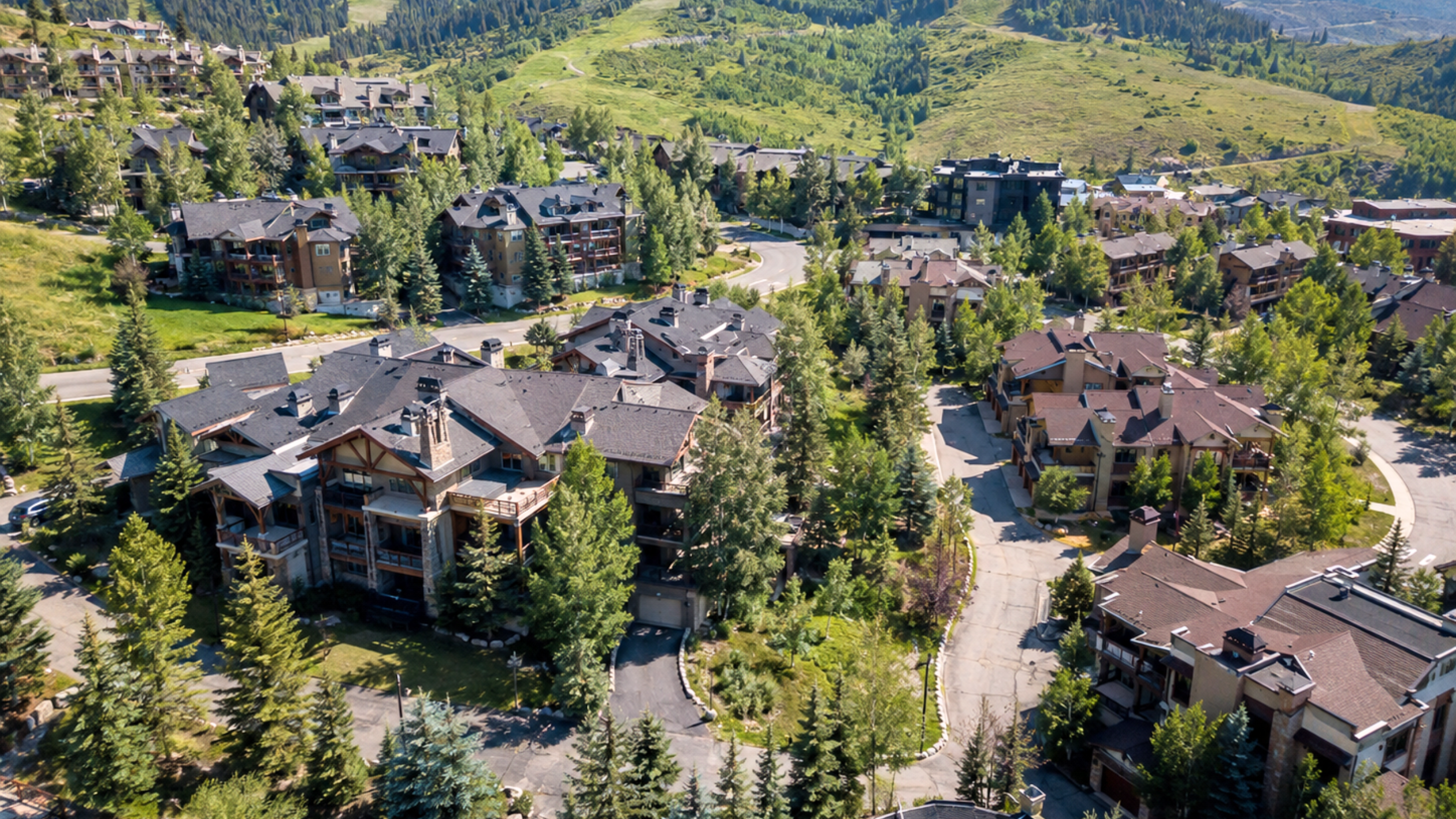
Condo HOAs in the resort base areas generally run from about $1,000 to $3,000 or more per month, with branded luxury buildings in Upper Deer Valley and Empire Pass frequently exceeding $3,000. These fees typically cover exterior maintenance, building insurance, snow removal, and amenity operations, and in full-service buildings they fund concierge staff, ski valets, pools, spas, and shuttles.
Empire Pass owners also pay the master association fee on top of building dues, and the community carries a 1 percent transfer fee at closing that funds the private ski lodges and shared infrastructure. Deer Crest carries its own 1 percent transfer fee. The Colony at White Pine Canyon typically runs 0.5 to 1 percent.
Promontory
Promontory is where buyers most often underestimate the true monthly cost. The Conservancy assessment, which is the HOA layer that applies to every owner whether or not they join the club, runs around $500 or more per month. Club membership is separate and optional in structure but central to the lifestyle: full golf membership dues run around $2,000 per month, with a social tier around half that, plus a membership deposit and food and beverage minimums.
Add it up and a Promontory golf household is realistically budgeting $30,000 or more per year in community costs before property taxes. There is also a 1 percent transfer fee at closing. For the right buyer, the amenity package justifies every dollar. My job is making sure you see the full number before you fall in love with the view.
Glenwild
Glenwild is Park City's more intimate golf community, and its structure has a quirk worth knowing: membership is not tied to property ownership. You can own in Glenwild without a golf membership, and non-owners can join the club, which gives owners here more flexibility than Promontory's model. Community HOA dues cover the gated entry, roads, and common area maintenance, membership dues sit on top for those who join, and the community carries a 1 percent transfer fee at closing.
In-Town Park City: Old Town, Park Meadows, Prospector
In-town costs drop significantly. Old Town condos vary widely by building age and amenities, from modest fees in simple walk-up buildings to resort-level dues in newer full-service projects near the Town Lift. Park Meadows and other established single-family neighborhoods often charge only nominal annual fees, sometimes in the low hundreds per year, covering entry landscaping and basic common areas.
Transfer fees here are gentler too. Standard condo buildings typically charge a flat fee in the low hundreds or a fraction of a percent, and many single-family neighborhoods like Pinebrook and Silver Creek keep flat fees in the $100 to $300 range.
Jordanelle Corridor and Newer Communities
The corridor around the Jordanelle Reservoir mixes newer condo and townhome projects with club communities like Victory Ranch and Red Ledges toward Heber. Newer townhome HOAs typically land in the mid hundreds per month, covering exterior maintenance and snow removal. Victory Ranch and Red Ledges each carry a 0.5 percent transfer fee, roughly half the resort-core standard, which is one of several reasons value-focused buyers keep pushing this direction.
The Question That Matters More Than the Fee: Reserves
Here is the part portals will never tell you, and where I have saved clients real money. A low HOA fee is not automatically good news. Buildings that underprice their dues for years often make up the gap with special assessments, one-time bills to owners that can run from five figures to six when a roof, elevator, or boiler finally demands replacement. Park City's snow loads and freeze-thaw cycles are hard on buildings, so this is not a theoretical risk here.
Before any of my clients close on a condo, we review the HOA budget, the reserve study, meeting minutes, and any pending litigation or planned assessments. A building charging $1,800 per month with healthy reserves is often a safer buy than one charging $1,200 with an empty fund and a thirty-year-old roof.
What This Means for Your Search
Do not filter properties by HOA fee alone. Filter by total monthly cost of ownership and by what the fee delivers. A full-service Deer Valley building with a $3,000 fee might replace $3,500 of costs you would otherwise carry yourself. A golf community fee only makes sense if you will use the golf. And a suspiciously low fee deserves more scrutiny, not less.
Every neighborhood on this list prices its lifestyle differently, and the right answer depends entirely on how you will use the property. That is a conversation I am glad to have with real numbers for the specific buildings on your shortlist.
Get the Real Numbers Before You Write an Offer
I keep current HOA and transfer fee details on the communities my clients ask about most, and I review the association documents on every purchase before my buyers commit. If you are comparing neighborhoods and want the true cost of ownership side by side, call or text Tom White at 435.640.0217, or start your search at parkcityhomesales.com. Bring me your shortlist and I will bring the numbers the portals leave out.